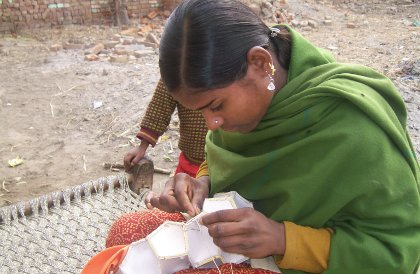
Pakistan has a per-capita income of $1,900 per year, meaning that a person survives barely on $5 per day. And that's not all, Pakistan has a traditional culture where earning of one person goes on feeding 10 other persons and with the high rate of augmentation it becomes difficult for a low income population to survive.
Recently if you go to a shop to buy your child a new soccer ball, there is a good possibility that the ball has been made by someone your child's age or even younger. About half of the world's soccer ball are made in Pakistan, and each one of them passes through a process of production where child labor is involved. This problem not only pertains to Pakistan but is worldwide. More than 200 children, some as young as 4 and 5 years old, are involved in the production. Majority of these children work in Asia, e.g in the nations of India, Pakistan, Bangladesh and Indonesia.

http://www1.american.edu/ted/nike.htm